

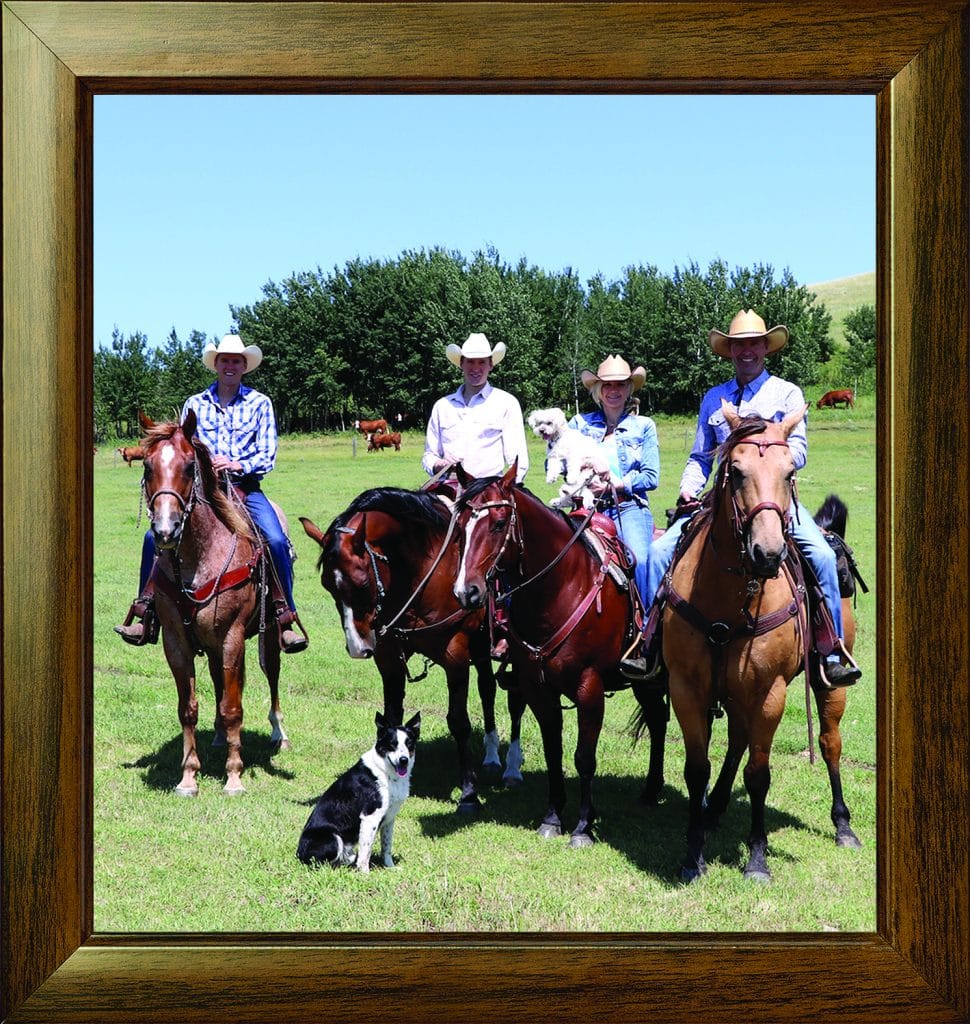
Our family’s roots in farming and ranching date back for centuries. We have now taken our experiences & values from our pasture to your pet’s bowl. Our food is produced to human-grade standards and every single batch gets lab safety tested. With Raised Right, you can enjoy peace of mind with every bite.
Sincerely,

Braeden Ruud, Co-Founder / CEO
Our Story

[Braeden Ruud, Co-Founder / CEO of Raised Right, kneels in a grassy field beside on of the Ruud family's dogs.] "I'm Braeden, and this is Tike, and this is the story of why our family started Raised Right."
[Larry Ruud, Co-Founder / CFO of Raised Right, stands in a field with a horse grazing behind him.] "Our family has been farming and ranching for centuries. We take a lot of pride in raising our animals and taking care of the land. It's important for us to produce safe and healthy food for people to eat. Why should it be any different for pets?"
[News footage from CNN reporting on a pet food contamination outbreak.] "A few years ago there was a massive outbreak of pet food contamination. It caused the deaths or illnesses of thousands of dogs."
[Mary Ann Ruud, Co-Founder / Chief Nutrition Officer of Raised Right, is in her kitchen holding one of the Ruud family's dogs.] "I decided from then on, I was going to cook homemade food for our pets using the same ingredients we eat ourselves, so we know exactly what's in it. After a while, friends and family started asking about our food because they didn't trust the food their pets were eating either. And that's when the idea for Raised Right was born."
[Raised Right food is scooped from its package, a dog eats from a bowl, and trays of meat are shown cooking in a steam oven.] "All our meals are cooked in USDA inspected, human grade facilities, and every ingredient has passed the same standards that are necessary for human consumption. Not only that, but you should know where your food comes from and how it gets made. That's why we show videos of how your food gets cooked, along with a map tracing all the ingredients in our meals to their source, right on our website."
[A laptop shows the Raised Right website's Transparency page.] "To help ensure your pet's meals are safe, we won't ship your food unless it passes our lab safety test. Raised Right exists to give peace of mind with every bite. That's why we provide stage of life specific recipes with customized feeding and no preservatives or filler ingredients, and we deliver to your doorstep in an environmentally sustainable way."
"Are you hungry? Is it dinner time? Let's go."
Top 5 Reasons to Feed Human Grade Pet Food by Dr. Karen Becker
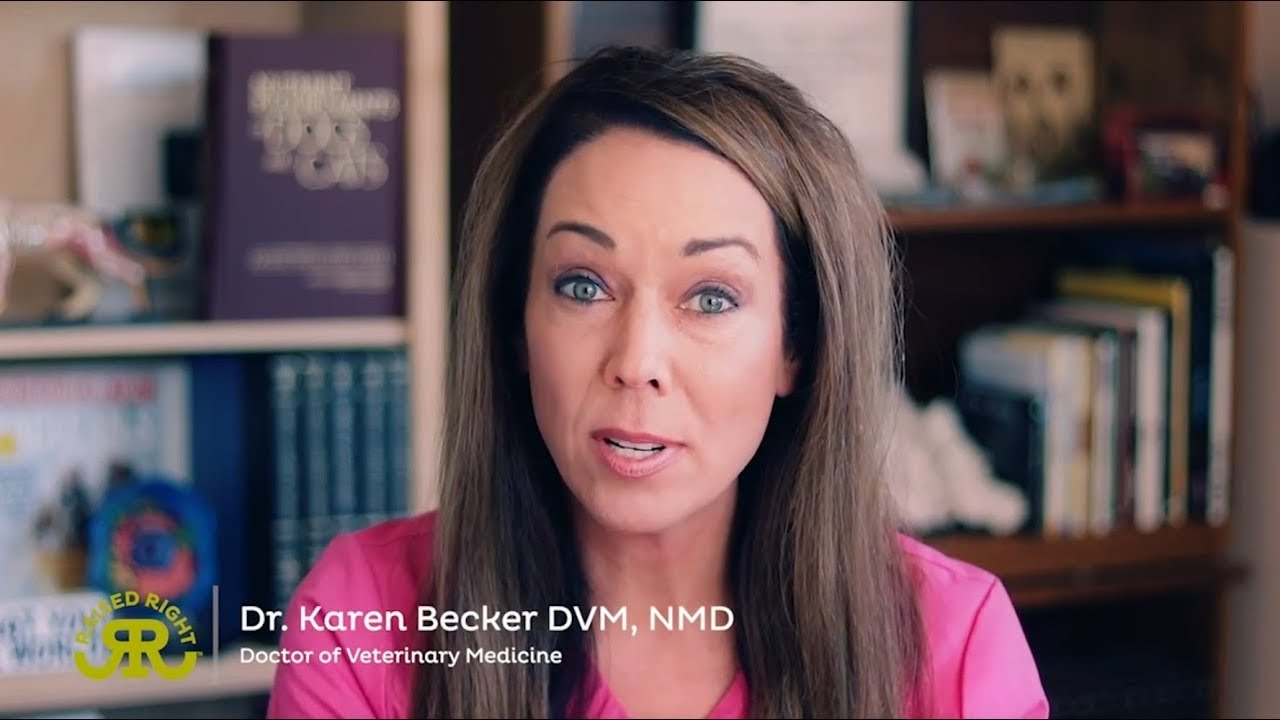
[Dr. Karen Becker, Doctor of Veterinary Medicine, speaks to the camera from an office lined with bookshelves.] "Hi, I'm Dr. Karen Becker, and these are the top reasons why I recommend feeding human grade pet foods.
As someone who specializes in species appropriate veterinary nutrition, what's normal in the pet food industry is really concerning for me. I work with small companies to formulate well balanced pet meals that are full of USDA certified meats, superfoods, antioxidants, organic herbs and non GMO oils, as well as essential fatty acids, to provide optimal pet nutrition.
Knowing where the pet food comes from and where it's made is also really important. Look for pet foods prepared in USDA regulated, human grade facilities. This is extra important because it means that every ingredient has passed the same standards necessary for human consumption and is traceable."
[A laptop shows the Traceable Ingredients map on RaisedRightPets.com, listing ingredients such as chicken thigh, chicken heart, blueberries, cranberries and carrots.] "Good pet food companies provide maps of where every ingredient is sourced from, so that you'll know exactly what you're feeding and where it came from. Pet owners deserve the right to feel confident that they are not only making the healthy choice for their pet, but that they're also making the safest possible choice.
Sadly, pet food quality control testing isn't mandatory in the industry, but ethical pet food companies voluntarily choose to test their foods. I recommend feeding foods that have a quality control protocol in place, such as batch testing, which ensures that each lot of pet food produced has been tested and declared pathogen free.
Pet food can be formulated for all life stages or for individual life stages. Foods that have been formulated for all life stages means that nutrition is not tailored for specific periods of an animal's life. Animals require specific nutrients at different stages of life, so ideally it's best to feed a food that's been formulated for growth for puppies and kittens, and foods that have been formulated for maintenance for adult pets.
The natural diet of dogs and cats does not include things like potatoes, corn and grains. They're commonly used in the industry because they're cheap fillers, not because they promote good health. Look on the back of your average pet food bag. There are way too many carbohydrates and other highly processed ingredients in those foods. I recommend only feeding ingredients that are biologically correct and necessary to give your pet the ideal nutrition that they need. And the more ingredients coming from real, whole, fresh foods means a whole lot less synthetic vitamins that are required to be put into the pet foods."
[A small dog eats Raised Right food from a bowl.] "We know it happens actually more than necessary, that a pet gets too much food way too often. Do you know how much food you need to be feeding your pet? Most pet food companies actually intentionally recommend too much food because they're trying to sell a product. Ethical pet food companies will have very detailed feeding instructions, or even better, a meal calculator on their website, where you can input your pet's information like age, weight and activity level to get the proper serving size required to maintain your pet's body weight.
We love our pets, and they're members of our family, and we want their health to be the very best that it can be. Making informed, conscientious choices about what you'll feed your pet is the single most important health decision you will ever make for your pet, so make sure that you're choosing wisely."
See The Journey Behind Your Pet's Meals
This video has music and no narration. It shows how Raised Right's meals are made, step by step, with a caption on the screen for each step.
- Title card: Raised Right logo with "See The Journey Behind Your Pet's Meals."
- Grinding Meat: raw meat is ground in a stainless steel grinder.
- Mixing Meat with Organic Herbs and Oils: ground meat turns in a large stainless steel mixer.
- Cooking Meat: trays of ground meat are cooked on racks.
- Cooking Fruit and Vegetables: cranberries and carrots are cooked.
- Crumble Meat: the cooked meat is crumbled in a mixer.
- Mixing in Fruit and Vegetables: diced carrots and berries are poured into the crumbled meat and mixed.
- Sealing Bags: the filled bags are sealed.
- Closing card: Raised Right logo with "Peace of Mind with Every Bite" and www.RaisedRightPets.com.
How To Serve Raised Right's Meat Bites
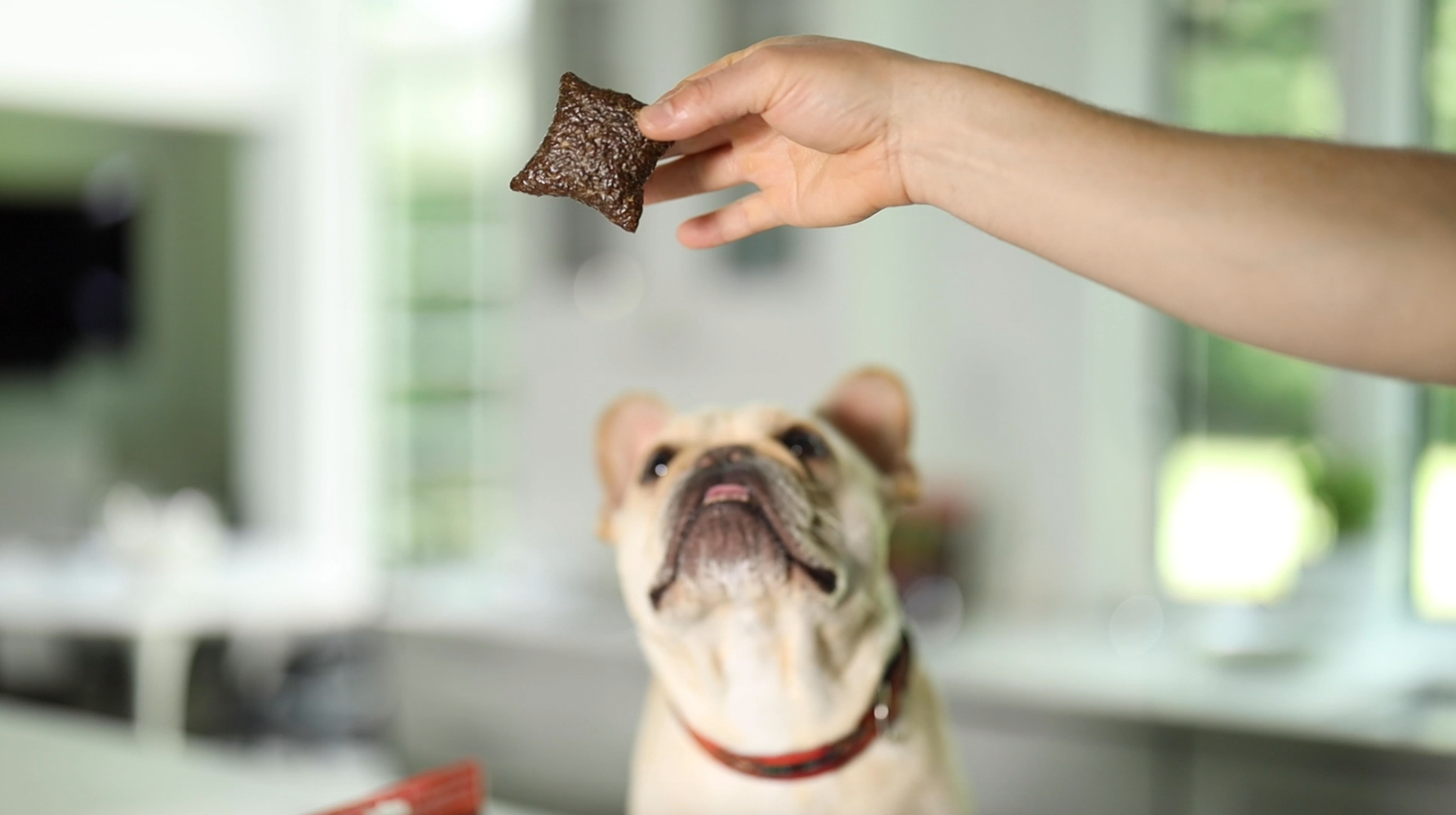
This video has music and no narration.
- A hand holds up a square liver treat. On screen: "Single Ingredient Liver Treat. No Preservatives."
- A hand opens a bag of Meat Bites. On screen: "Open the Bag."
- The treat is snapped into smaller pieces. On screen: "Break It Up."
- A French bulldog takes a piece from a hand. On screen: "Serve the Treat."
- The dog is given another treat.
- Closing card: Raised Right logo with "Peace of Mind with Every Bite."
How To Serve Raised Right's Shake A Flakes
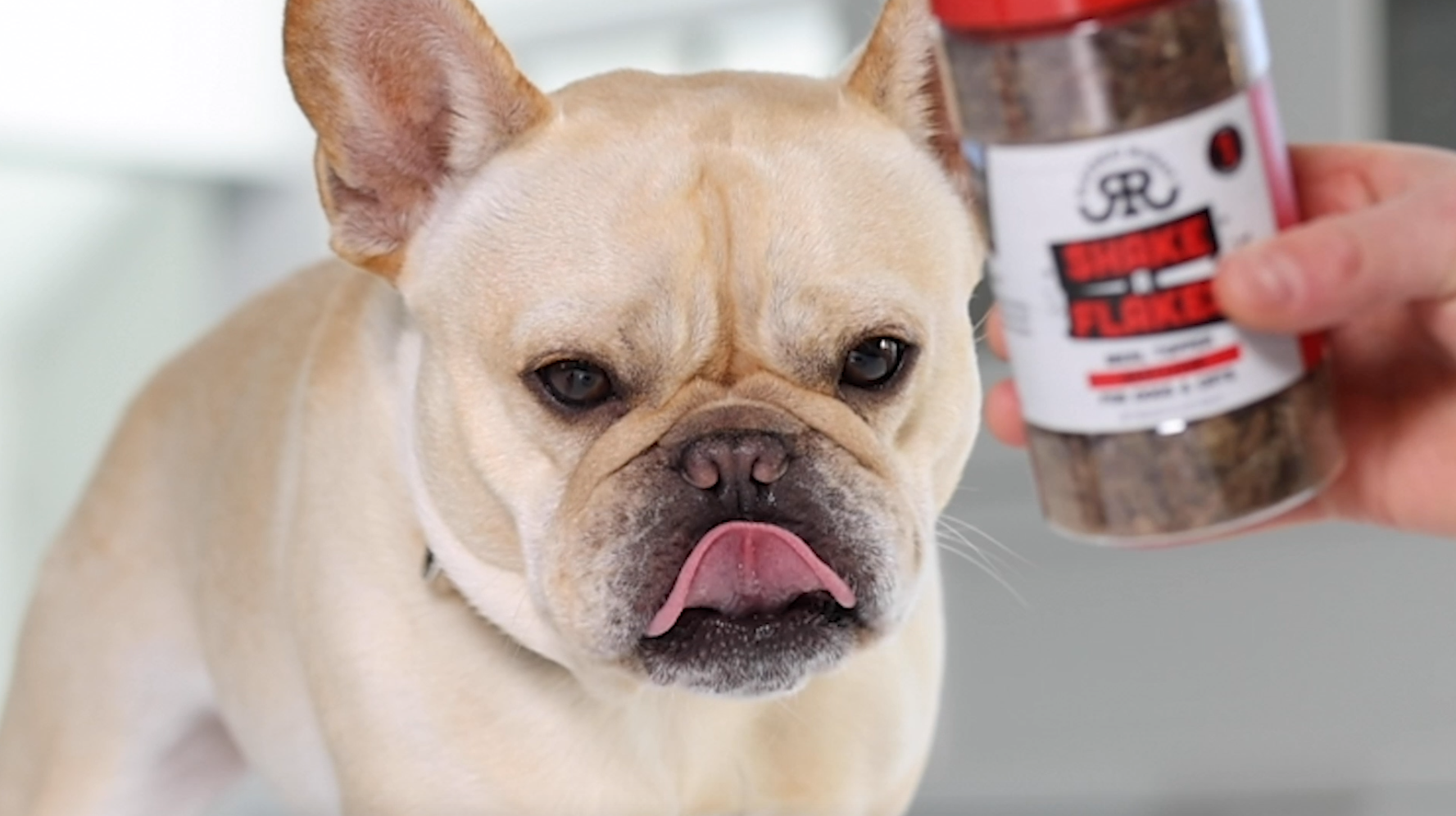
This video has music and no narration.
- A French bulldog watches a hand hold up a jar of Shake A Flakes.
- On screen: "Single Ingredient Meal Topper. No Preservatives."
- Three jars of Shake A Flakes sit on a counter. On screen: "Traceability. Lab Safety Batch Tested."
- A hand opens the lid. On screen: "Pop the Top."
- Flakes are shaken from the jar. On screen: "Shake the Flakes."
- The dog stands on a counter as a bowl of food topped with flakes is set down, then eats from the bowl.
- Closing card: Raised Right logo with "Peace of Mind with Every Bite."
Dr. Karen Becker & Dr. Barbara Royal Discuss Veterinary Support Recipes

[Two veterinarians, Dr. Karen Becker and Dr. Barbara Royal, sit side by side in armchairs and talk with each other.]
"Hi, I'm Dr. Karen Becker." "And I'm Dr. Barbara Royal." "And we are so excited to have a little chat today about kidney disease and pancreatitis."
"Yeah, kidney disease is one of those things where we're talking a lot about protein. And people really focus on that, and they're always saying, oh, make sure to lower the protein in kidney disease. What we've really found is the most important thing, in fact, is phosphorus. The protein levels, in fact, should be relatively high. And the quality of protein is imperative."
"Rendered, animal grade, feed grade protein is horrible for the kidneys, so using human grade lean meats is really important. Those amino acids are really critical to prevent weight loss, but low phosphorus is equally as important. What are your concerns about phosphorus?"
"Phosphorus drives me crazy as a practitioner because it's the number one thing that makes them not want to eat. They just feel sick. It's sort of like they're just overwhelmed with so much phosphorus in their blood that they're almost like having a really bad, nauseating hangover. It's a terrible thing to have in your body all the time, and your kidneys are really in charge of clearing that. When they're not working well, they're not clearing it well, so we really need a diet that's going to keep the phosphorus low so that it isn't taxing the system. And phosphorus is the marker that we use as veterinarians, actually, for a prognostic indicator of how long animals can and will last with chronic kidney disease."
"So a low phosphorus, excellent quality protein diet is really important. Fiber can also act as a nitrogen trap in the belly and can do a nice job of helping to prevent extra urea from being absorbed, so a moderate amount of healthy, low glycemic fiber is also quite beneficial. And that keeps the bacteria and the microbiome in the gut really happy and healthy, and that's super important to keep the kidneys healthy as well. You don't want a lot of the byproducts from toxic metabolism going on. So the more we do causes of health for the system in our diets, the more likely we're going to keep kidneys healthy and happy."
"The other thing that is imperative is a really excellent source of those B vitamins, whole food sources of B vitamins. In fact, just B vitamins in general, really good for nausea and also stimulating appetite."
"Yeah, I love B vitamins. B vitamins are one of the things that I'm always giving to kidney cases anyway. With food, it's wonderful. We do injections and things as veterinarians, but get it in the food. And it's not always that easy to get enough of the B vitamins, so make sure that your food is including a lot of them."
"And so, moving on to pancreatitis. Pancreatitis ranges from subacute to fatal. It can happen to any animal if they ingest a substance that the pancreas isn't able to handle. You can end up with a hospitalized case of pancreatitis, but far more common are these low simmering, ongoing, chronic cases of pancreatitis where, despite the fact that maybe animals are on incredibly low fat diets, they've got this elevated PLI on blood work that is persistent, causing animals to not feel well: nausea, vomiting, diarrhea. They just feel awful. So pancreatitis, I would almost classify it as a hidden epidemic."
"Yeah, I agree. I think there's been a real problem in identifying it and also just managing it, because one of the things I think that really contributes to the pancreatitis that I'm seeing is a poor quality diet, where the pancreas is always being challenged to do too much. And I think the body has an inflammation problem, and for us to really handle that, we have to think about a very anti-inflammatory diet. It can make a huge difference for a pancreatitis problem."
"I have seen the best response decreasing the starch and sugar in the diet. We know that starch and sugar are pro-inflammatory. They create inflammation, and the 'itis' of pancreatitis is inflammation. So my first recommendation is get those unnecessary, refined, high glycemic carbs out of the diet. Now, we're not talking about the low glycemic, high fiber roughage, right? We're talking about, you know, no rice, no corn, no wheat. Just unnecessary carbs."
"Yeah, the unnecessary carbs and sugars. And then the next thing everyone talks about with pancreatitis is this low fat idea. And I can see in the very beginning, when there's an acute problem, that we really are careful with the diet, do something bland, get them through the critical stage. But after that, we're focusing very, very much on high quality, excellent fats that are not rancid and that are really going to solve some of the biggest problems we have."
"And I think choosing quality fats is really important, because fats really are vilified in pancreatitis. But you have to remember, the vast majority of animals dealing with pancreatitis have been eating pet food, most of which is feed grade, rendered, not human approved, wrong ingredients, which means the fats are oxidized. They've been high heat processed many times, and the levels of advanced glycation end products, the level of carry along, tag along products that actually induce a state of inflammation, is one of the reasons I think that chronic pancreatitis cases just don't ever resolve. So a minimally processed diet, a fresher food diet that has not been extruded, is, I think, key for managing long term pancreatitis."
"Yeah, and then making sure that your omega-6 to omega-3 ratio is appropriate, and that you're not feeding too many inflammatory fats, and you're including fats that are in very, very good shape. And that's one of the things that people forget: we're feeding these foods, even prescription foods that are for pancreatitis, but they're ultra processed foods, and that really means those fats are degraded in a way we really don't want to feed to a pancreatitis case. Not to mention digestibility."
"Home cooking, gently cooked foods that are human grade and maybe cooked once at low temperatures, those really are ideal for low grade pancreatitis all the way to severe, horrible pancreatitis. You really want to focus on quality and digestibility."
"Yeah, and of course the pancreas, as you know, the whole system is dealing with digestion. Everything should be highly digestible, and then we need to again focus on the microbiome, make sure that our fibers are terrific and they're helping us process the food and keeping toxins out of the system. Healthy food, healthy bodies. That's what we want."